Physicists challenge Microsoft’s quantum computing breakthrough
A peer-reviewed critique published Wednesday in Nature suggests Microsoft overstated the technical success of its Majorana 1 quantum chip. University of St. Andrews physicist Henry Legg argues that the company’s data fails to conclusively demonstrate the existence of the topological qubits hailed as the foundation of its future computing architecture.
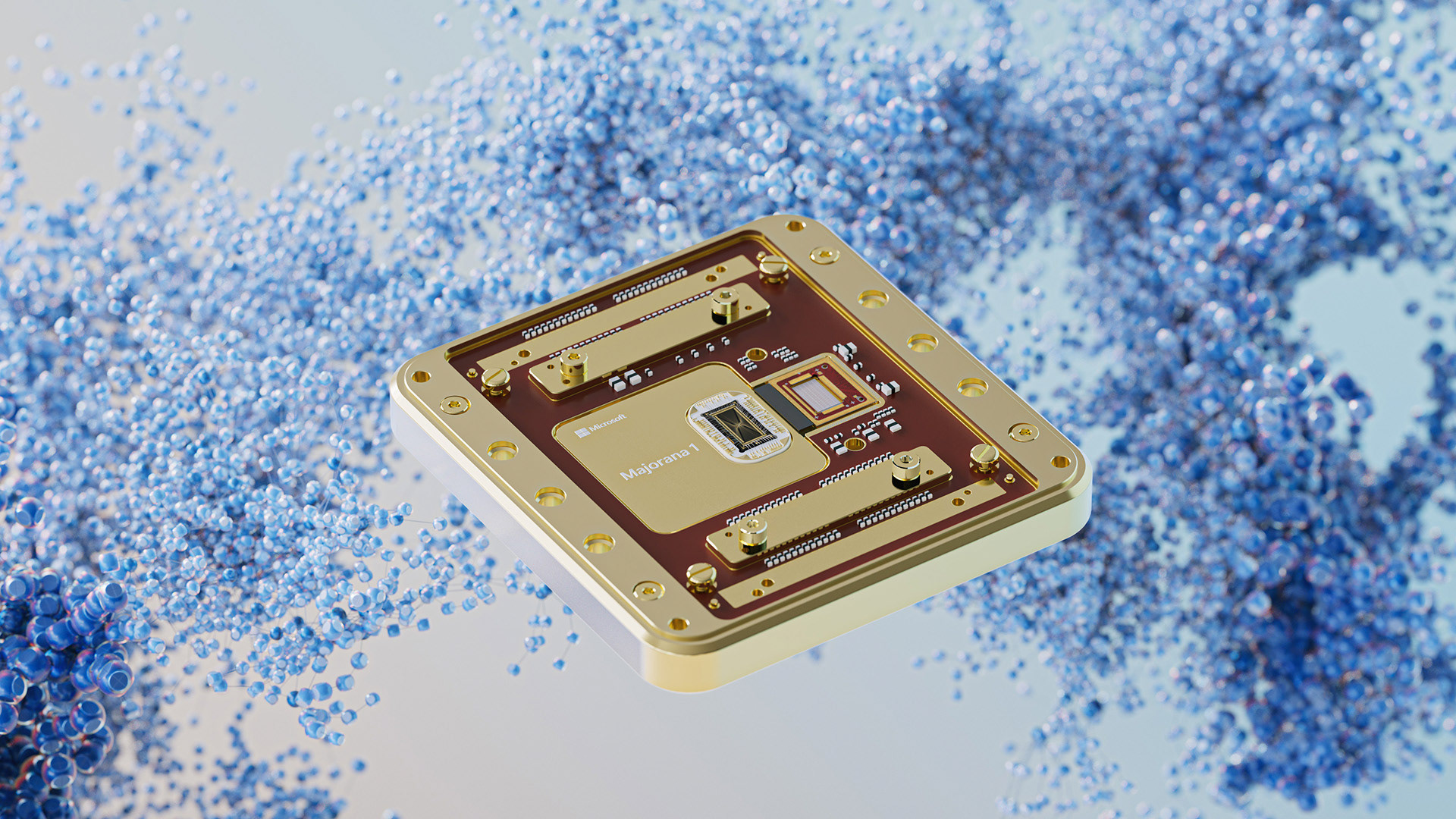
Microsoft introduced the Majorana 1 in February 2025, positioning its topological qubit design as the essential building block for a scalable quantum computer. The company recently doubled down on this trajectory by unveiling the Majorana 2 chip at the Build conference earlier this month. However, Legg’s re-analysis casts significant doubt on whether these devices actually achieved the specific particle behavior required for the technology to function as described.
The core of Microsoft’s approach relies on a specialized wire made of indium arsenide, thinner than a human hair, fused to a superconductor. Theoretical models suggest that electrons within this structure should organize into collective patterns known as Majorana particles. Microsoft intends to use these particles to encode information, a strategy that sets them apart from the superconducting circuits favored by competitors like Google and IBM. While those companies have produced more advanced hardware, the industry remains in a state where no machine has yet performed a demonstrably useful calculation. The validity of Microsoft’s path now hinges on whether their signature particle, the namesake of their hardware, is truly present.
Comments (0)
No comments yet. Be the first!