The Hidden $40 Billion Tax: How the Iran War Hits American Wallets
Since February, the conflict with Iran has functioned as an unacknowledged tax on American households, draining more than $41.9 billion from consumers at the fuel pump. As supply chains fracture in the Strait of Hormuz, the rising cost of energy is rapidly outpacing major federal infrastructure investments.
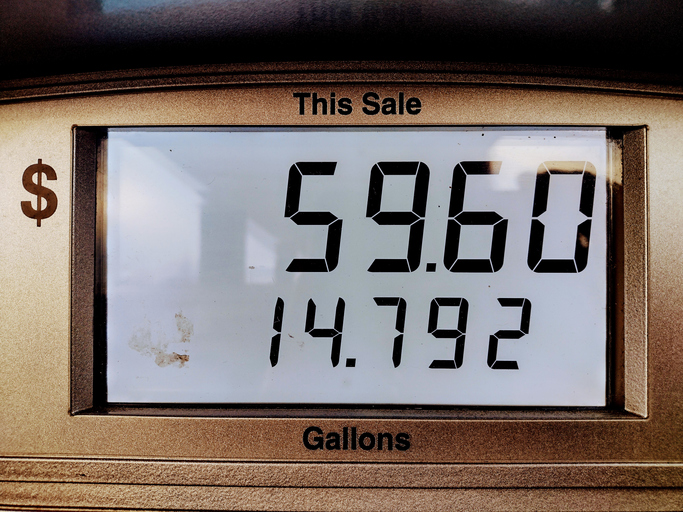
Brown University’s Climate Solutions Lab reports that the average American household has already absorbed over $320 in additional fuel costs. With the price of gasoline averaging $4.515 per gallon, the financial burden is staggering: $18.66 billion for diesel and $23.28 billion for gasoline. Jeff Colgan, director of the lab, describes these price shocks as an economy-wide levy that mirrors the scale of major federal programs.
The economic impact is stark when compared to domestic priorities. The $40 billion lost to fuel inflation could have fully funded the 2024 federal Bridge Investment Program, which targets the modernization of 10,200 bridges, or exceeded the $31.5 billion required to overhaul the national air traffic control system. Despite the mounting pressure on rural families and farmers, President Trump dismissed concerns about the domestic financial fallout, stating recently that the public's economic struggle is not on his mind.
Global markets remain volatile, with 350.org estimating that, during the first month of the conflict alone, consumers and businesses worldwide sustained losses of up to $111.6 billion. While fossil fuel companies record significant gains, policymakers like Sen. Ed Markey warn that the trend is unsustainable, projecting annual costs to reach $876 per vehicle if current price levels persist.
Comments (0)
No comments yet. Be the first!