IBM and Qedma Achieve Quantum Advantage in Material Physics Modeling
Researchers from IBM and Qedma have successfully modeled complex quantum material dynamics that exceed the capabilities of the world’s most powerful supercomputers. By pairing IBM’s Heron processor with Qedma’s error-mitigation software, the team resolved oscillatory behaviors in a two-dimensional Floquet Ising model, establishing quantum hardware as a trusted scientific instrument.
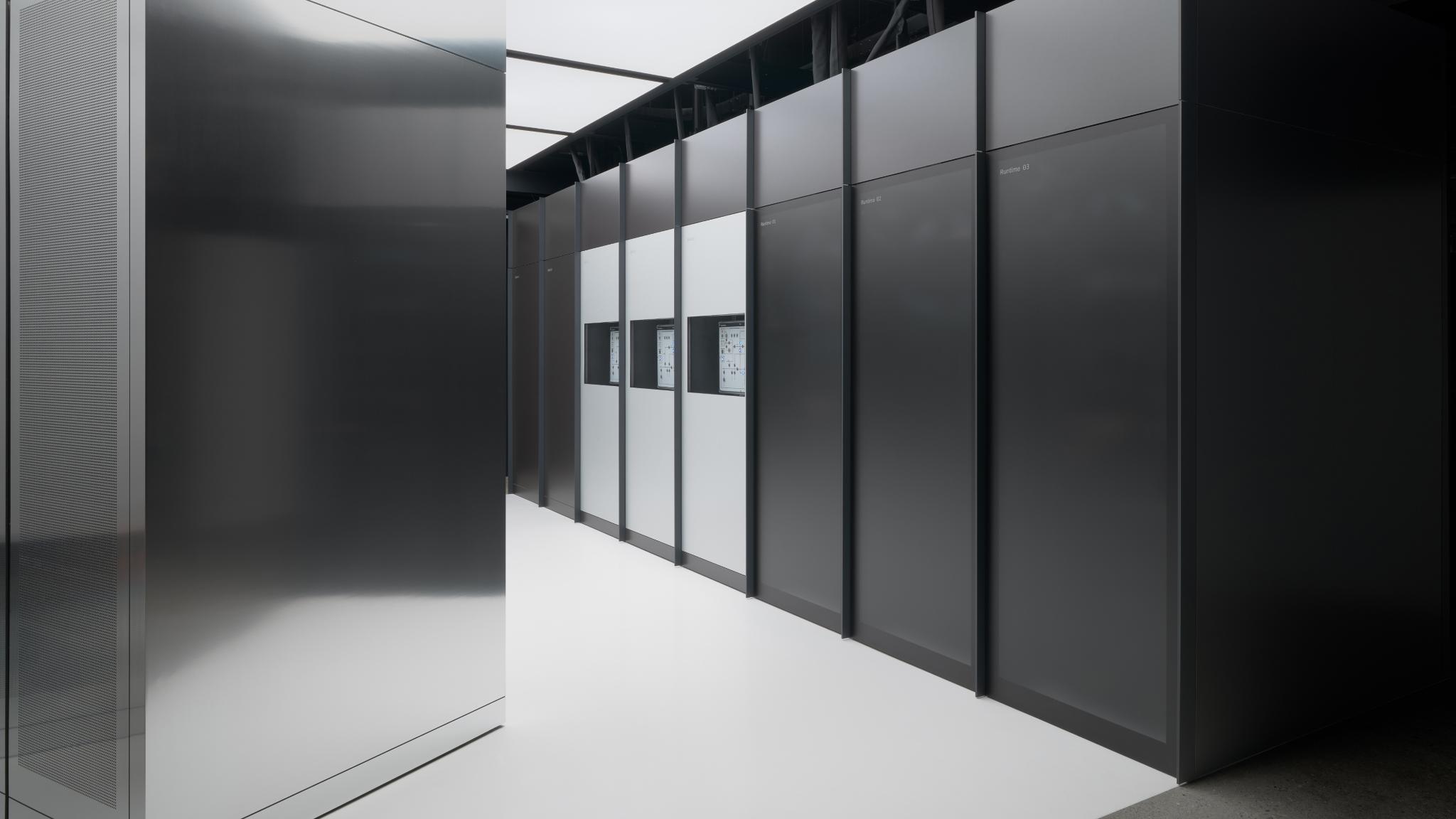
The collaboration tackled the Floquet Ising model, a system tracking how magnetic properties shift under rhythmic external pulses. Because these oscillations rapidly overwhelm classical computational methods, the researchers utilized Qedma’s Quantum Error Suppression and Error Mitigation (QESEM) software to stabilize the noisy output of IBM’s cloud-accessible quantum hardware. The resulting data provided a consistent view of long-time dynamics that state-of-the-art classical simulations, including those run on Japan’s Fugaku supercomputer, failed to replicate.
To ensure the findings were not artifacts of hardware noise, the team performed rigorous validation. They first benchmarked their protocol against classical calculations in regimes where traditional methods remain accurate, then extended the experiment into territory where classical models lost reliability. Independent verification across different hardware, including trapped-ion systems from Quantinuum, further confirmed that the observed physics originated from the quantum system itself. This achievement, now documented in an arXiv pre-print, signals a shift toward using error-mitigated quantum computers for practical applications in optoelectronics and light-induced superconductivity.
Comments (0)
No comments yet. Be the first!