Blood Biomarker p-tau217 Tracks Alzheimer’s Treatment Response
A study from Korea University College of Medicine suggests that measuring plasma p-tau217 levels could offer a minimally invasive way to monitor how patients with early-stage Alzheimer’s respond to lecanemab, potentially replacing the need for repetitive and costly PET imaging for biological tracking.
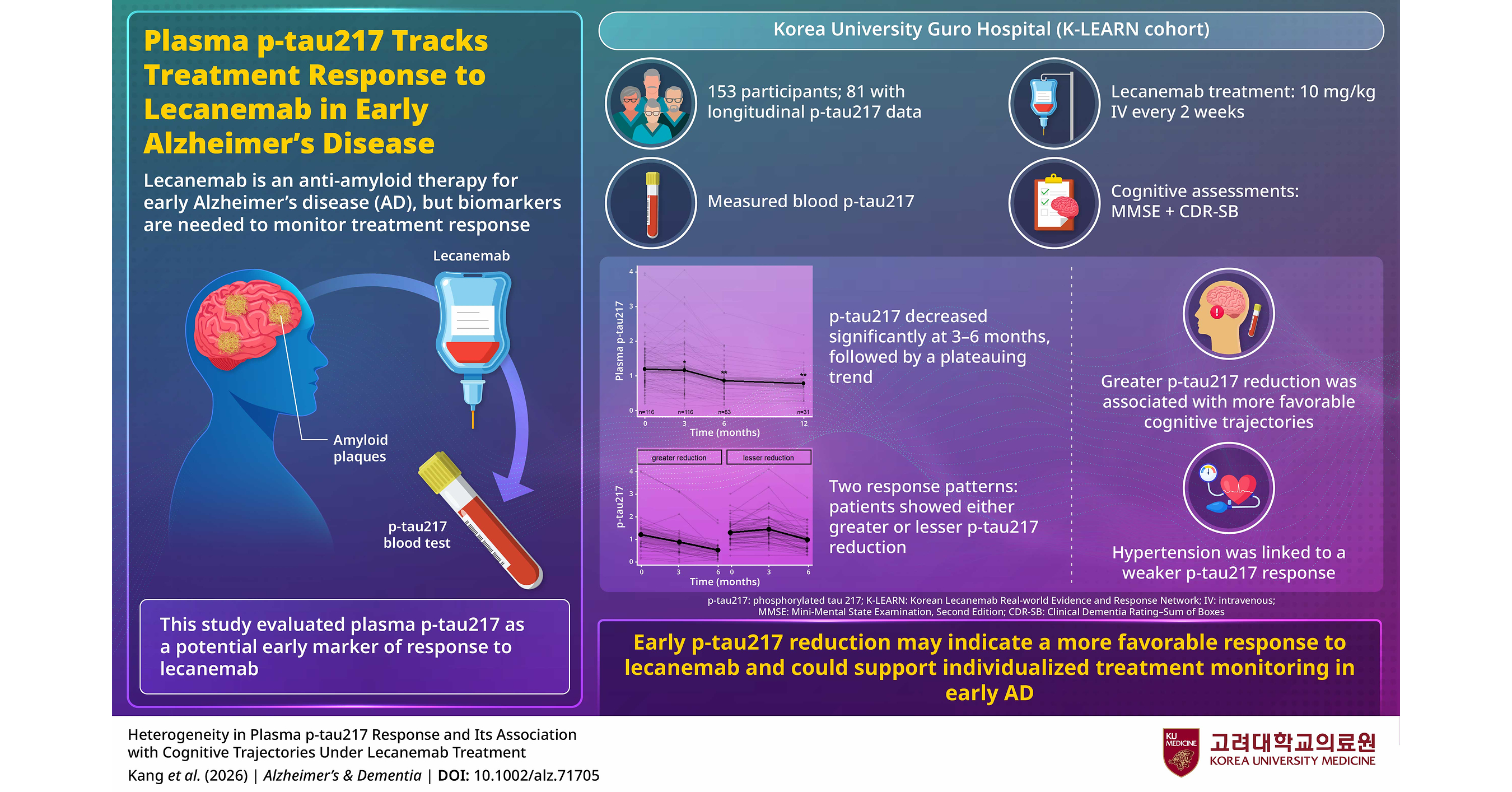
Led by Associate Professor Sung Hoon Kang, researchers tracked 153 patients receiving the anti-amyloid therapy. By analyzing 81 patients with complete blood data over six months, the team identified two distinct patterns of p-tau217 reduction. Patients who experienced a steeper decline in these biomarkers displayed more favorable cognitive trajectories, specifically showing a slower worsening of scores on the Clinical Dementia Rating–Sum of Boxes (CDR-SB) scale over a one-year period.
The data revealed a significant correlation between physiological markers and clinical outcomes, even after adjusting for baseline characteristics. Notably, the study uncovered that patients with underlying hypertension were significantly more likely to fall into the group with a weaker biomarker response. While the findings indicate that p-tau217 could become a critical tool for clinicians to tailor care, the researchers emphasized that larger, multicenter trials are necessary to establish standardized thresholds for routine clinical use.
Comments (0)
No comments yet. Be the first!