Iranian President Challenges UN on Definition of Terrorism
Standing before the UN General Assembly, Iranian President Masoud Pezeshkian inverted Washington’s long-standing narrative by labeling the United States a terrorist state. Holding photographs of children killed in a February strike on a primary school in Minab, he accused American and Israeli forces of systematic aggression against civilians.
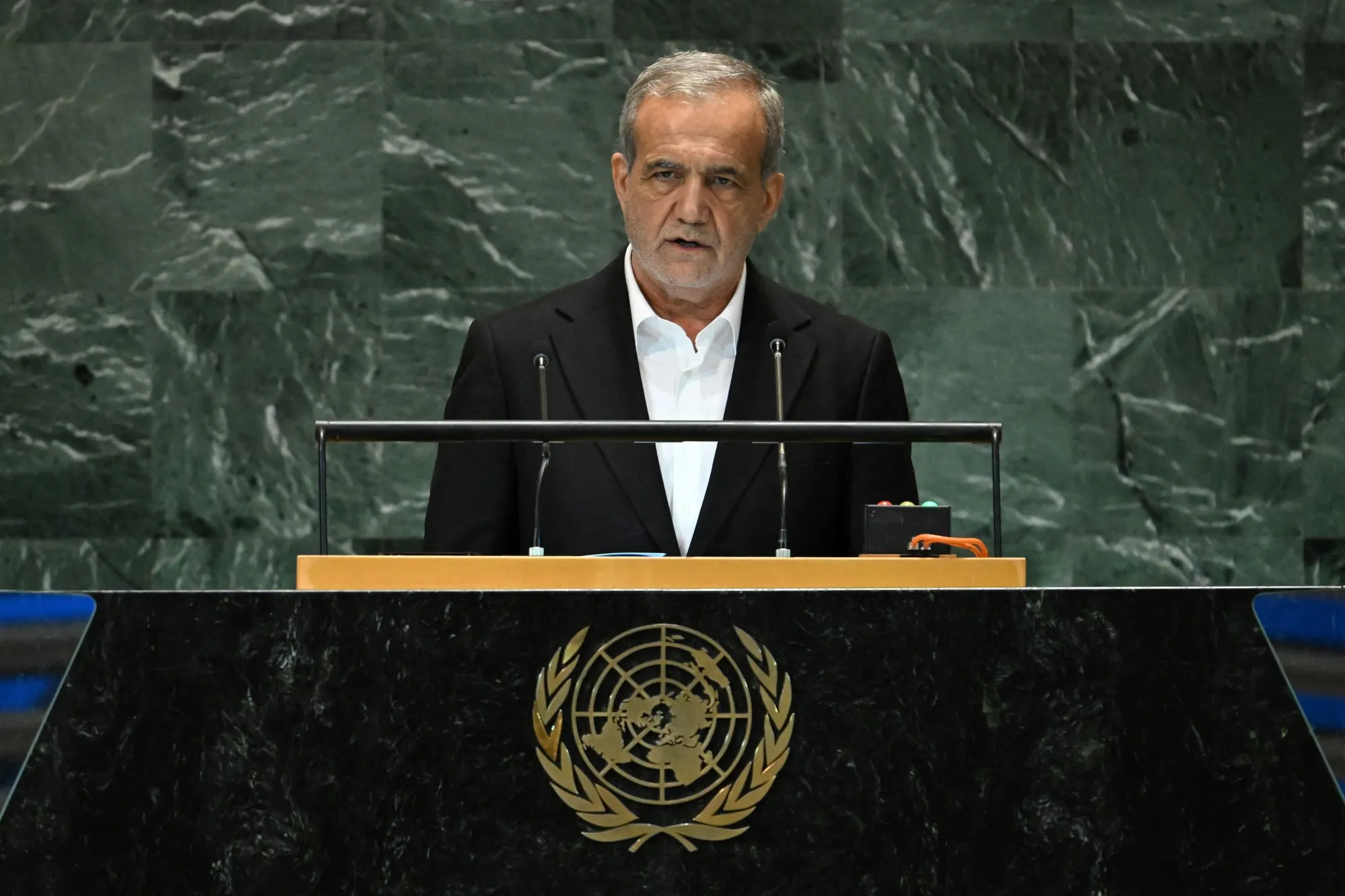
Pezeshkian’s address in New York triggered an immediate walkout by the U.S. representative. The Iranian leader detailed a history of what he termed state-sponsored terrorism, citing the destruction of Iranian infrastructure, hospitals, and schools. He argued that Iran has not initiated an attack on another nation for two centuries, contrasting this with a record of U.S. interventionism spanning from the 1950s overthrow of the Iranian government to recent operations in Gaza.
The Debate Over Global Definitions
The speech reignited a volatile debate regarding which entities possess the authority to define terrorism. Critics of U.S. foreign policy, including political commentator Kyle Kulinski, argue that by applying the U.S. government’s own legal definition—acts intended to coerce civilian populations or influence government policy through mass destruction—the United States qualifies as the world’s primary perpetrator of such acts. This perspective draws on a long historical trajectory of U.S. military actions, from the Vietnam War to the support of paramilitary groups in Nicaragua and the recent provision of weapons in the Gaza conflict. As tensions persist, the fundamental question remains whether the possession of superior military technology and AI-driven targeting systems effectively shields powerful nations from the very labels they apply to their adversaries.
Comments (0)
No comments yet. Be the first!