Jeffries Avoids Direct Answer on US-Israel Defense Cooperation
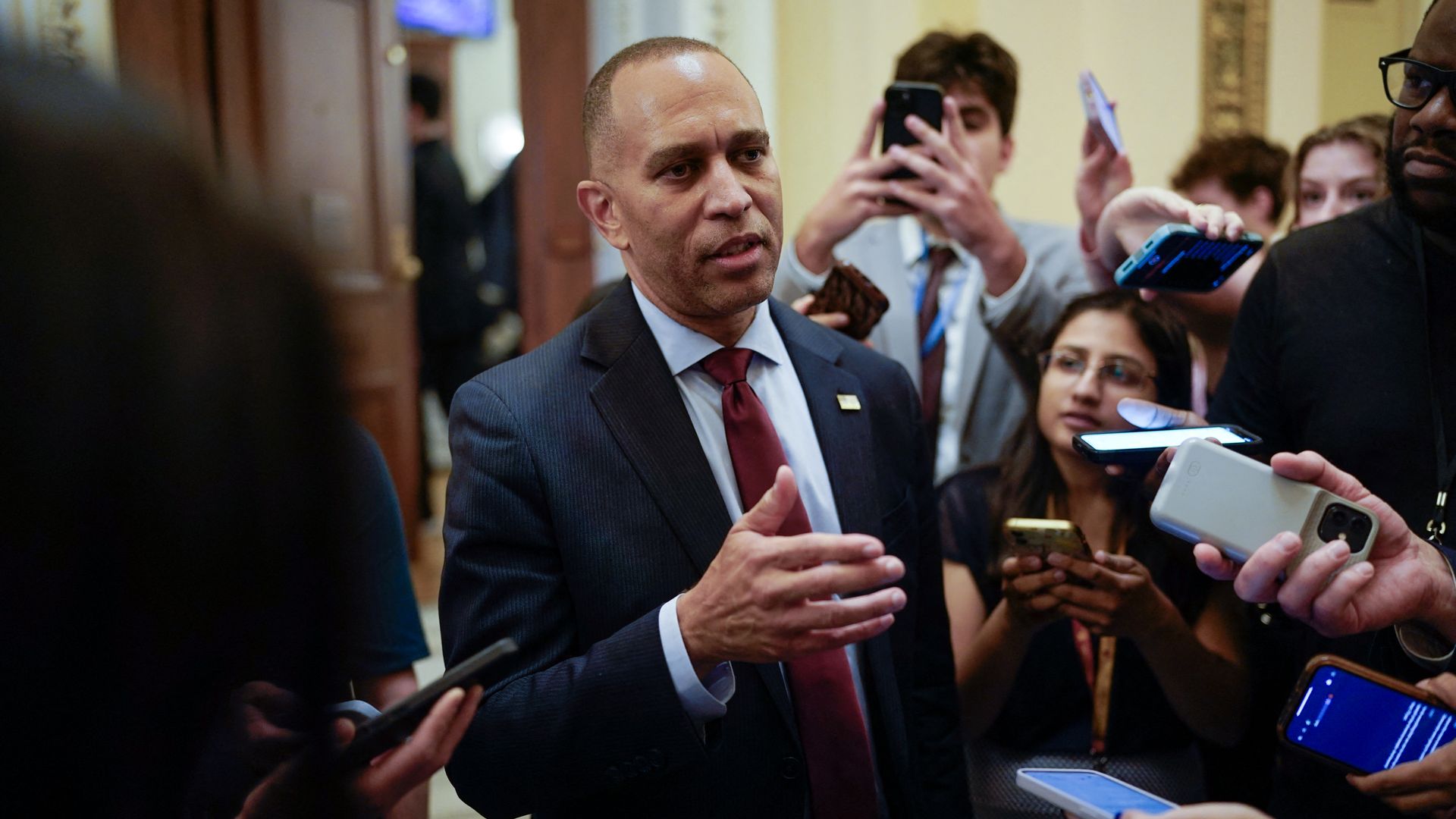
At a Thursday news conference, House Democratic leader Hakeem Jeffries did not say whether he supported removing proposed US-Israel military cooperation provisions from the 2027 defense bill. Instead, he spoke about the need for change in the Middle East, drawing criticism from progressives who say Democrats should oppose the measure.
The provisions in the National Defense Authorization Act would expand cooperation between the countries’ defense industries, including joint weapons development, technology sharing and the use of Israeli technology in US military systems. Sen. Chris Van Hollen (D-Md.) has urged Democrats to oppose them, warning that they could increase Israel’s influence over US policy and expose sensitive US military technology. He and colleagues have also argued Israel could gain access to information not shared even with NATO allies.
Asked by The Hill’s Laura Kelly whether he agreed with Van Hollen, Jeffries said he had not spoken with the senator. He called for “dramatic change” in the West Bank and Gaza and as the memorandum of understanding winds down, and said Israelis and Palestinians deserved a just and lasting peace. He described that as a safe and secure Israel alongside an independent Palestinian state.
An August Data for Progress poll found that 61% of likely voters opposed the initiative, including 78% of Democrats. The NDAA is expected to come up for a vote next month. It would need 60 votes to overcome a Senate filibuster; in the House, Republicans hold a 218-214 majority. Republican Reps. Thomas Massie of Kentucky, Lauren Boebert of Colorado and Anna Paulina Luna of Florida have signaled opposition, so a united Democratic caucus could block the provisions.
Trita Parsi, executive vice president of the Quincy Institute for Responsible Statecraft, said Jeffries had made clear “why he should not become the next speaker of the House.” On social media, Parsi criticized him for not answering whether he backed removing the provisions. Jeffries has faced other criticism, including over his response to calls to use a government funding bill to pressure President Donald Trump over the Iran war and the attendance of Democrats for a vote advancing Defense Secretary Pete Hegseth’s impeachment.
The dispute comes as Democrats consider leadership ahead of the next Congress. The party caucus begins its leadership elections on November 18, and the House is scheduled to elect a speaker when the new Congress convenes on January 3, 2027. No Democrat has formally challenged Jeffries. Organizers have urged Rep. Ayanna Pressley (D-Mass.) to run; a petition supporting her candidacy has drawn more than 90,000 signatures. Pressley has called for a bolder Democratic agenda, including Medicare for All and national abortion protections. No member of the House Democratic caucus has publicly endorsed her.
Comments (0)
No comments yet. Be the first!